Education · Diamonds · 30 October 2026 · 2 min read
Diamonds as Currency: A History of Concentrated Wealth and Global Value
By Trinity Diamants
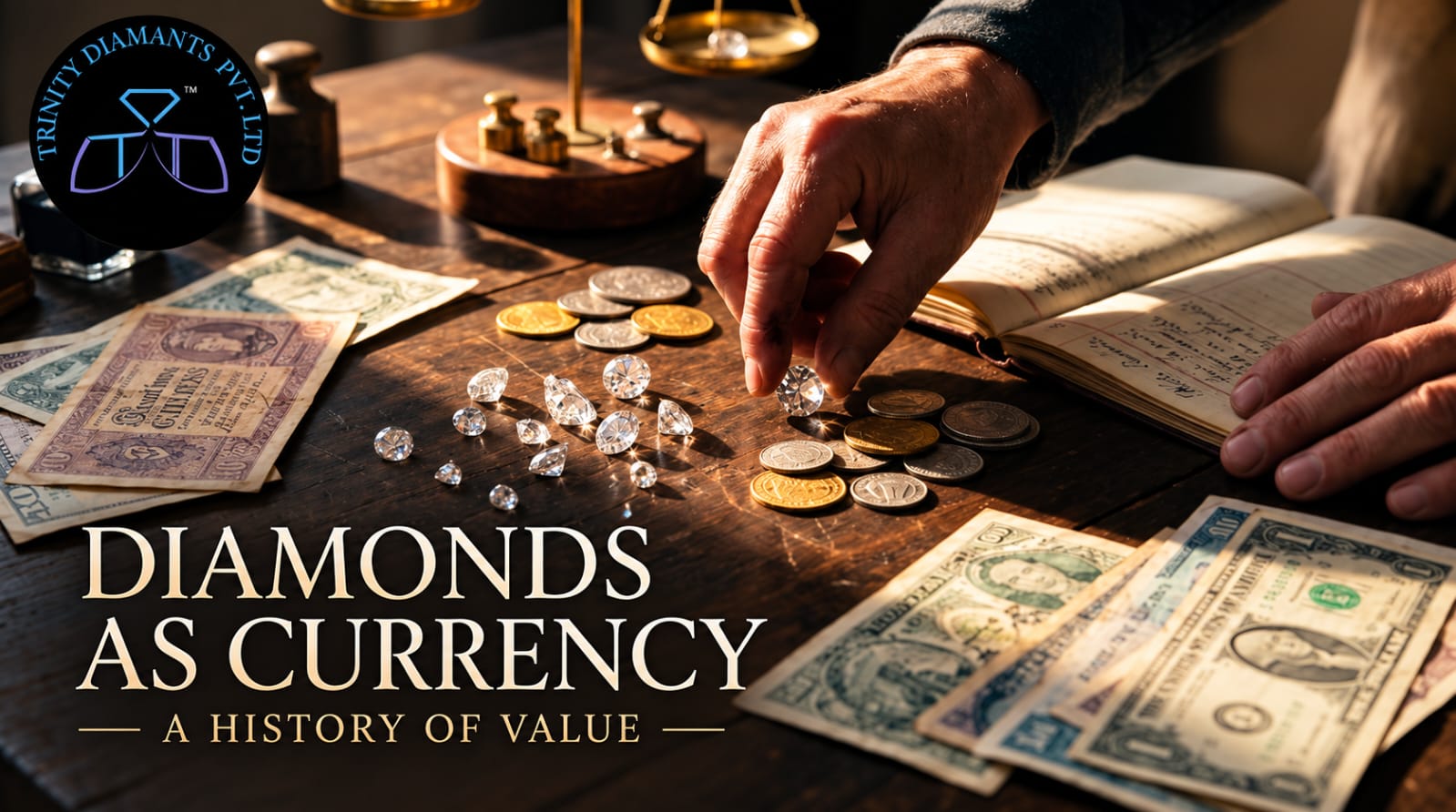
Long before modern financial instruments existed, merchants, royalty, and refugees recognized a unique economic truth: a single gem could hold the worth of an entire estate. While gold anchored national treasuries, diamonds functioned as the world's most concentrated, discreet medium of exchange. Tracing the role of diamonds as currency reveals why tangible brilliance continues to command enduring global value.
Ancient Trade Routes: Golconda and the Origins of Portable Capital
The story of diamonds as a store of value began along the riverbeds of ancient India, notably in the legendary mines of Golconda. Mentioned as early as the 4th century BCE in the Sanskrit political treatise Arthashastra, diamonds were taxed, inventoried, and traded not merely as decorative stones, but as sovereign financial reserves.
As merchant caravans traversed the Silk Road and maritime spice routes, diamonds served distinct monetary advantages:
- Unmatched Portability: Caravans crossing hostile territories could transport fortunes undetected, sewn into the linings of garments or saddles.
- Universal Recognition: Across disparate empires with incompatible coinages, raw and cut diamonds maintained intrinsic desirability among rulers and merchants alike.
- Collateral for High-Stakes Commerce: Gemstones regularly backed transcontinental letters of credit, securing trade shipments before banking networks matured.
What Made Diamonds a Secret Fiat?
Gold and silver required carts and armed guards; diamonds offered hyper-concentrated liquidity. Long before the Gemological Institute of America formalized the 4Cs, experienced traders evaluated stones by clarity, weight, and light performance, using established valuation tables recognized from Venice to Goa.
During periods of political upheaval, diamonds repeatedly became the ultimate currency of survival. European aristocrats during revolutions, merchants escaping wartime embargoes, and families facing sudden exile all relied on diamonds to liquidate immovable assets—such as land and estates—into gems that could slip safely past guarded borders.
"Gold is the money of monarchs, but diamonds have always been the reserve currency of crisis—silent, invisible, and imperishable."
From Historical Safe Harbors to Modern Tangible Assets
While modern commerce operates primarily on digital ledgers and fiat currencies, diamonds retain their historical status as a hedge against volatility and currency devaluation. High-grade, certified natural diamonds and rare colored stones represent a finite physical commodity that exists completely outside the banking system.
Today’s collectors view high-carat natural stones through the same lens as ancient merchant dynasties: as an ultra-compact store of purchasing power with an immutable pedigree. Whether preserving intergenerational wealth or curating an exquisite private collection, the underlying thesis remains unchanged: true value is timeless, durable, and universally acknowledged.
Preserving Value for Generations to Come
The journey of diamonds from royal trade currencies to refined heirlooms illustrates a fundamental principle—tangible rarity never goes out of fashion. As you consider building or expanding your own collection, selecting authenticated, exceptional stones is essential to honoring this legacy.
Discover our curated collection of investment-grade natural diamonds, or schedule a private consultation with our gemologists to explore custom sourcing tailored to your legacy goals.