History · Diamonds · 18 October 2026 · 2 min read
The Kimberley Discovery: The Dawn of Modern Mining
By Trinity Diamants
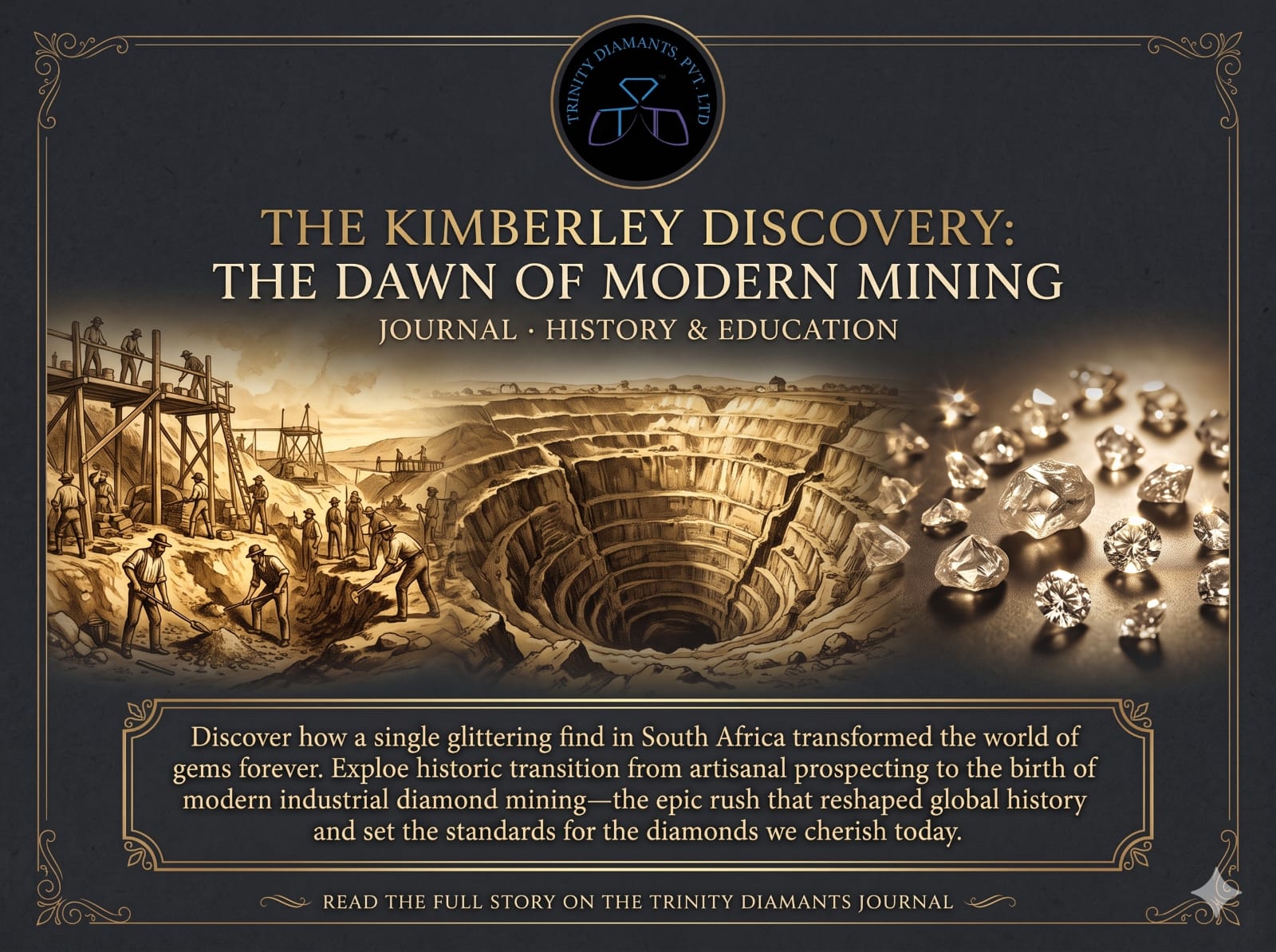
Before the late 19th century, diamonds were rare anomalies sifted by hand from river gravels in India and Brazil. That all changed in the dusty plains of South Africa, where an unexpected discovery sparked an unprecedented rush and revolutionized how humanity unearths treasures from the deep earth.
From Riverbeds to Volcanic Pipes: The 1867 Breakthrough
The diamond revolution began quietly in 1867 when a young boy named Erasmus Jacobs picked up an alluring transparent pebble along the banks of the Orange River near Hopetown—a 21.25-carat gem later christened the Eureka Diamond. While initial critics dismissed it as a geological fluke, the 1869 discovery of the Star of South Africa (an 83.5-carat rough crystal) proved that southern Africa held immense diamond wealth.
Prospectors quickly realized that the richest deposits lay not in moving water, but deep inside dry ground:
- Alluvial shifting yields to primary deposits: Miners moved from alluvial river sifting to digging directly into weathered yellow ground and hard subterranean kimberlite pipes.
- The Colesberg Kopje rush (1871): A sprawling encampment sprang up almost overnight around a modest hill, rapidly expanding into thousands of independent, vertically dug claims.
- Birth of the "Big Hole": As individual pits merged, miners carved out what remains one of the largest hand-dug excavations in human history.
The Industrialization of Diamond Extraction
The Kimberley strike pushed mining technology past its primitive origins. As shafts reached deeper into the hard blue kimberlite rock, individual prospectors could no longer maintain dangerous, crumbling claim walls without collective infrastructure.
Open-pit picks and shovels gave way to aerial ropeways, steam-powered hoisting engines, and large-scale industrial processing plants. This era cemented the transition from artisanal hunting to organized, corporate engineering—laying the structural groundwork for De Beers Consolidated Mines and standardizing grading, extraction, and distribution on a global scale.
"The discovery at Kimberley did more than flood the world with diamonds; it transformed gem mining from opportunistic scavenging into an exact geological science."
The Enduring Legacy of Kimberley
Today, modern diamond mining owes its core principles to the lessons forged in the red dust of Kimberley. Identifying kimberlite pipes remains the primary vector for locating natural diamond deposits worldwide, from Botswana and Canada to Australia.
Understanding the deep geological history behind your diamond enriches its timeless allure. To discover ethically sourced, natural diamonds cut with the precision born from this historic craft, explore our bespoke collections or schedule a consultation with our gemological specialists.