
Education · Diamond Science · 10 September 2026 · 2 min read
The Science of Sparkle: Understanding Light Performance in Diamonds
By Trinity Diamants
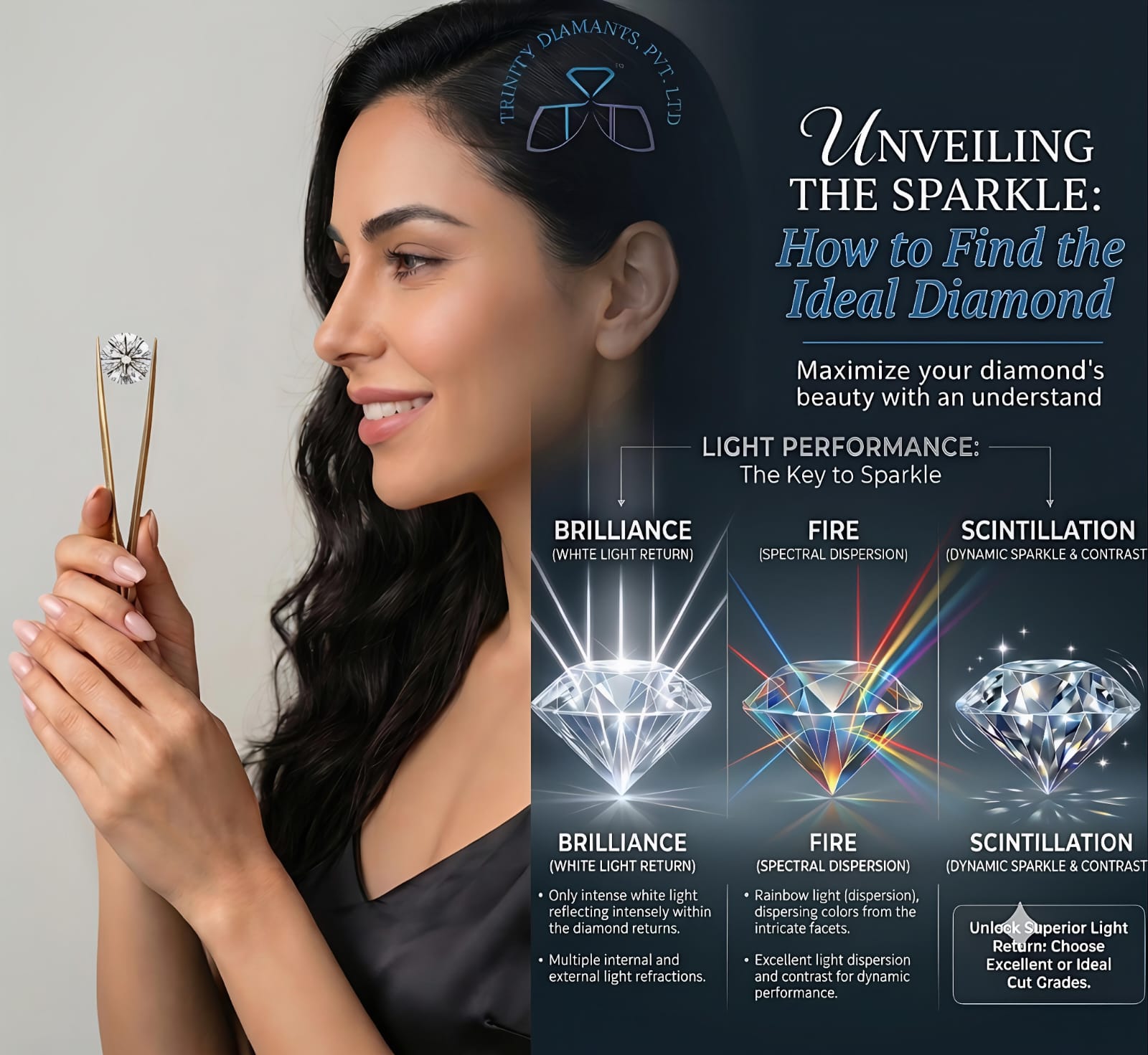
Have you ever wondered why two diamonds of the exact same carat weight and clarity can look drastically different in person? The secret lies not in the gemstone's rarity, but in how skillfully it interacts with light—a concept known in gemology as light performance. Understanding the science of sparkle allows you to choose a diamond that truly captivates from every angle.
The Three Pillars of Diamond Sparkle
When light enters a diamond, it undergoes a complex journey of reflection and refraction. Gemologists evaluate this optical spectacle through three primary components of light performance:
- Brilliance (White Light Reflection): The foundation of a diamond's radiance. Brilliance refers to the total amount of white light reflected back to the viewer's eye from both internal and external surfaces.
- Fire (Spectral Dispersion): The mesmerizing flashes of spectral colors—reds, blues, golds, and greens—that occur when white light breaks apart as it passes through the diamond's facets.
- Scintillation (Dynamic Play & Contrast): The dynamic interplay of light and shadow that occurs when either the diamond, the light source, or the observer moves. High scintillation creates that lively "twinkle" effect.
How Precision Cut Unlocks Optical Performance
While color and clarity are natural characteristics formed deep within the earth, cut is the only factor controlled by human artistry. A poorly cut diamond allows light to leak through the bottom or sides, resulting in a dull, lifeless appearance regardless of its clarity grade.
When a diamond is proportioned with exact mathematical precision, light enters through the table facet, strikes the pavilion mirrors at ideal angles, and reflects directly back up through the crown to the viewer's eye.
“A diamond’s true beauty is not merely held in its clarity, but awakened by the master cutter’s ability to bend light to their command.”
Selecting a Diamond with Superior Light Return
To ensure your diamond delivers maximum brilliance, look beyond the basic 4Cs on a grading report. Advanced ideal-scope tools and light performance certificates assess how efficiently a stone handles light.
- Opt for Excellent or Ideal cut grades from reputable gemological laboratories.
- Pay close attention to table and depth percentages, which dictate the reflection angles.
- Observe the diamond under varied lighting conditions, from natural daylight to focused spotlighting, to see how fire and scintillation perform.
Discover Your Perfect Sparkle
Choosing a diamond is both an art and a physical science. Whether you prefer the classic brilliance of a round brilliant cut or the sophisticated flashes of an emerald cut, understanding light performance empowers you to make an informed, timeless choice.
Explore our meticulously selected collection of ideal-cut diamonds or schedule a private consultation with a Trinity Diamants specialist to experience optical perfection in person.